Finance vs. Accounting: Key Differences Explained

Finance and accounting are two pillars of the business world, often mentioned together but vastly different in scope, function, and career trajectory.
From sound business decision-making to career shifts, understanding the distinction between these fields is crucial. This guide unpacks the core differences, daily responsibilities, required skills, and career pathways in business so you can make an informed choice aligned with your goals.
Key Differences Between Finance and Accounting
While both fields deal with money and are essential to any organisation, their focus, objectives, and ways of thinking differ sharply.
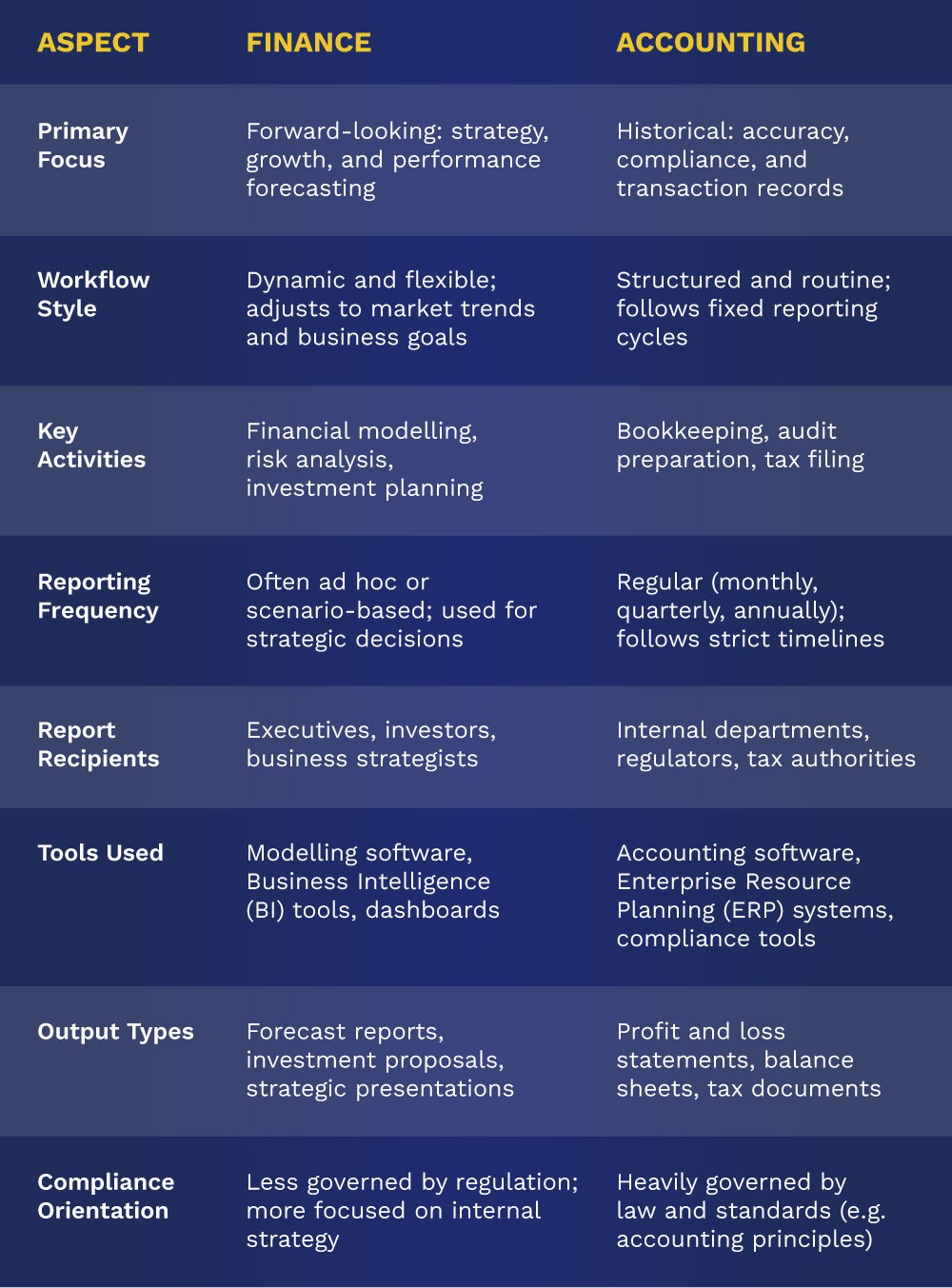
- Focus and Scope: Finance centres on managing assets, growing wealth, and strategic planning. Roles in finance typically involve investment analysis, budgeting and forecasting, and risk assessment to drive long-term growth. In contrast, accounting is more retrospective. It focuses on tracking and reporting past financial activity with strict adherence to accounting principles and financial compliance regulations.
- Core Functions and Objectives: In finance, professionals are tasked with corporate finance strategies, analysing equity markets, and helping businesses make investments that yield returns. Their work often informs major operational or capital decisions. On the other hand, accounting is more grounded in operations. Accountants manage tax planning, prepare balance sheets, and ensure accurate financial reporting. Their objective is to maintain the financial integrity of the organisation.
- Thought Process and Business Role: The thought process behind finance involves evaluating trends and forecasting future opportunities. Strategic and data-driven, finance professionals support high-level business decision-making. Accounting professionals, however, are more detail-oriented. They work within structured frameworks and apply management accounting methodologies to ensure that records are precise and compliant.
Typical Day-to-Day Responsibilities
Although finance and accounting are closely linked, their daily responsibilities differ in focus and function. Both roles require analytical skills, but how those skills are applied varies significantly in practice.
- Finance Professionals: Finance professionals often start their day analysing market trends or company performance. These feed into key decisions around funding, expansion, and mergers. Much of their work involves financial management, capital raising, and evaluating financial instruments and portfolios. Tasks could range from drafting risk assessment reports to developing long-term growth models.
- Accounting Professionals: Accountants follow a more structured routine, including bookkeeping, reconciling accounts, and preparing financial reporting documents. They are also responsible for auditing processes and ensuring that all financial statements comply with legal requirements and accounting principles.
Which Field Offers Broader and More Diverse Career Opportunities?
Both finance and accounting offer rewarding careers, but the pathways and opportunities vary widely.
- Common Roles in Finance: Careers in finance are broad and dynamic, ranging from financial analysts and investment bankers to portfolio managers and risk officers. With specialisation, professionals can move into corporate finance, wealth management, or financial consultancy. The field is highly responsive to industry trends in finance, including fintech and Environmental, Social, and Governance (ESG) investing.
- Common Roles in Accounting: Accountants can specialise in public accounting, internal auditing, or taxation. Progression often leads to roles such as controller, compliance officer, or Chief Financial Officer (CFO). Many pursue professional certifications such as Certified Public Accountant (CPA), Association of Chartered Certified Accountants (ACCA), or Certified Management Accountant (CMA) to advance their careers.
Skills Needed for Success

Although both fields demand numerical aptitude and analytical skills, the required competencies differ in significant ways.
- Finance professionals must be adept at strategic thinking, interpreting economic indicators, and understanding equity markets. Effective communication is also crucial for presenting insights to stakeholders. Additionally, a solid foundation in mathematics, economics, and financial modelling is essential, especially for those aiming to enhance their skills as financial analysts.
- Accounting professionals require sharp attention to detail and ethical judgement. A deep understanding of accounting principles and proficiency in accounting software is vital. Mastery in financial compliance, tax planning, and balance sheet preparation ensures success in this role.
Choosing the Right Path for Your Career
Understanding the distinctions between finance and accounting is crucial for making informed decisions about your career path. If you possess a natural flair for strategic thinking, a keen sense of business acumen, and an enthusiasm for driving growth, a career in finance may be an ideal fit. On the other hand, if you're meticulous, detail-oriented, and thrive in environments where precision and compliance are paramount, accounting could be the perfect profession for you.
If a career in finance is your ultimate aspiration, look no further than Sunway University’s Master of Finance. This 100% online programme offers the perfect blend of flexibility and industry-relevant content to prepare you for advanced roles in corporate finance where you'll have the opportunity to make a tangible impact on business strategy and drive growth.
Take the first step towards propelling your career to new heights by reaching out to our dedicated Education Counsellors here.